
Save your brain and family, Alzheimer’s
Alzheimer’s Diseases that can be treated with the help of the Laser Helmet
1.Alzheimer’s disease (AD)
2.Brain atrophy
3.Cerebral arteriosclerosis Insufficient , blood supply to the brain
4.Children with autism
5.Cerebral thrombosis, Cerebral
6.Lacunar infarction
7.Recovery of traumatic brain injury after operation
8.The recovery period after cerebral poisoning
9.Children with cerebral palsy
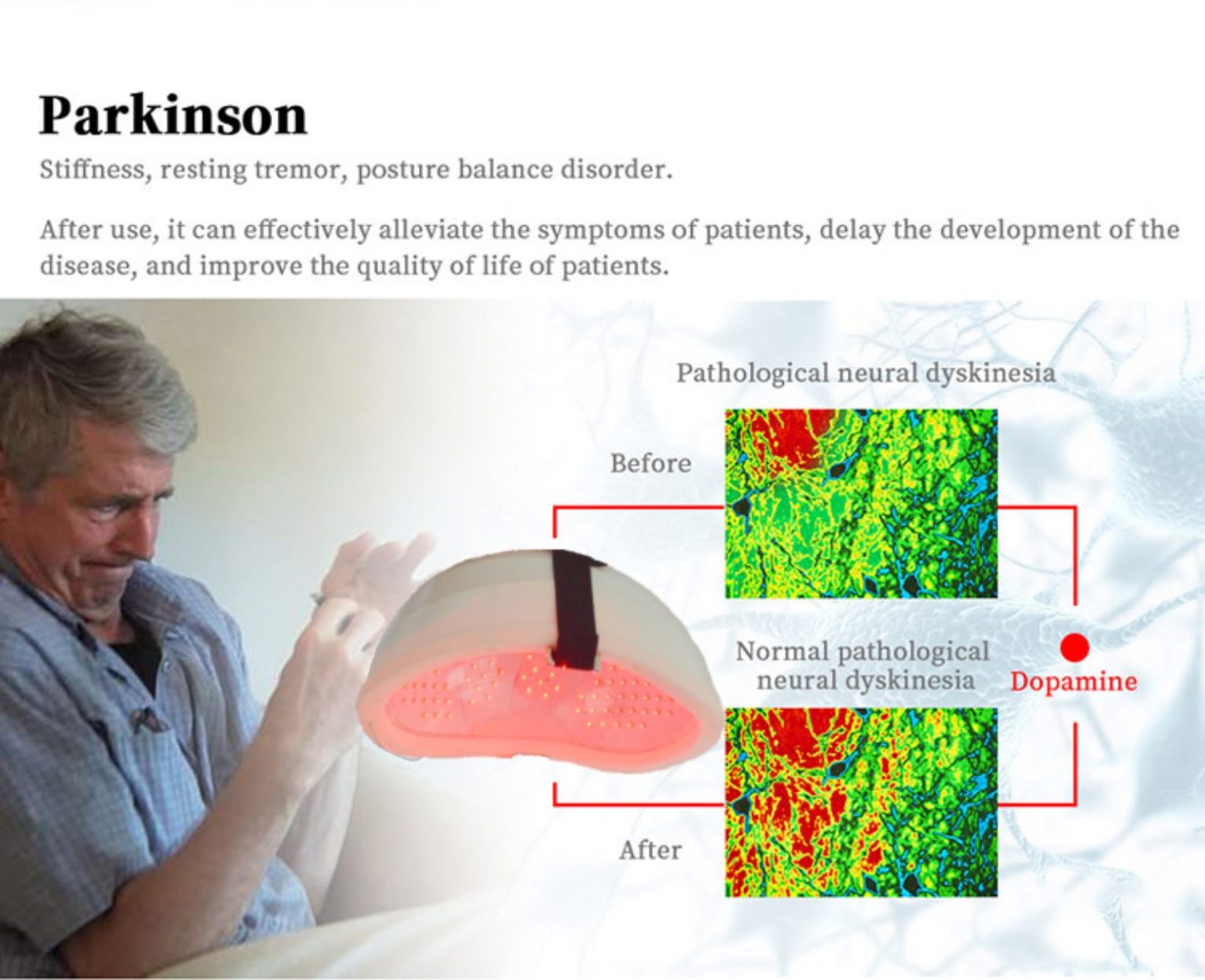
10.Parkinson’s disease
11.Depression
12.Mental disorders
13.Insomnia
14.Nervous headache
15.High blood pressure
16.Brain fatigue disease
17.Memory loss
18.Neurasthenia
19.Schizophrenia
Order now
Price: 1900,00 €
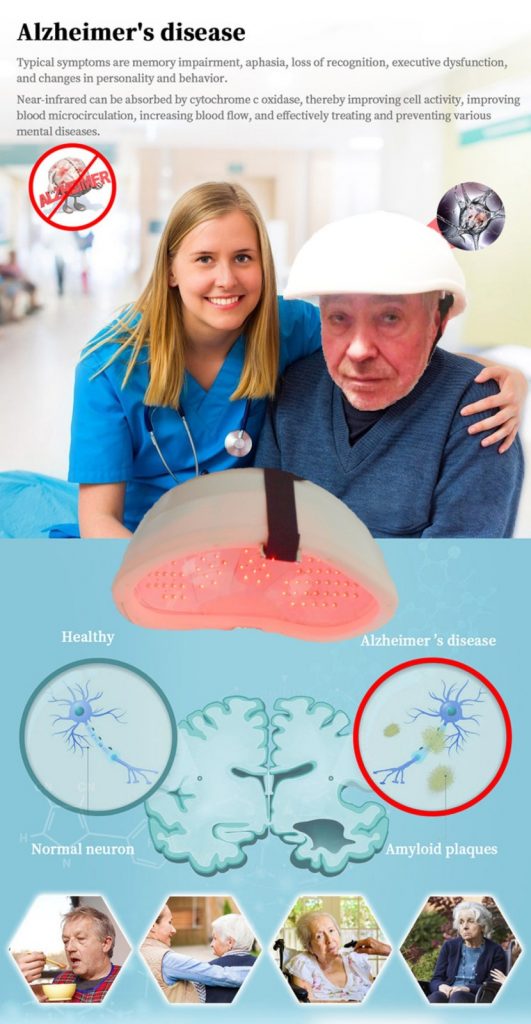
HOPE FOR DEMENTIA SUFFERERSio
Due to global aging, the number of people with dementia is expected to double every 20 years. People with dementia generally require high levels of care, most of which is provided by informal caregivers (i.e. family and friends). The Centers for Disease Control reports that over 16 million Americans provide unpaid care for people with Alzheimer’s or other dementias. These informal caregivers, and the loved ones whom they help, are at an increased risk of depression and a variety of other comorbid health complications.
Even after many years of research, a drug has yet to be developed to benefit …neurodegenerative disorders (such as dementia, Alzheimer’s, and Parkinson’s).” The few drugs that are prescribed to help with dementia (cholinesterase inhibitors and memantine) work temporarily and can have significant side effects. However, there is growing evidence that supports the use of photobiomodulation as a treatment for dementia.
EVIDENCE OF PHOTOBIOMODULATION AS TREATMENT FOR DEMENTIA
In 2017, Photomedicine and Laser Surgery published a clinical trial on the effects of photobiomodulation therapy (PBMT). Five trial participants received PBMT daily for 12-weeks with a 4-week follow-up period. Each participant had been previously diagnosed with dementia or AD. The study used the Medical Mental State Exam (MMSE) and the Alzheimer’s Disease Assessment Scale (ADAS-cog) to measure the severity of each participant’s dementia at baseline and after 12 weeks of daily PBMT.
The study found that 12 weeks of daily PBMT significantly improved cognition, sleep and anxiety, and reduced the frequency of wandering as well as angry outbursts. In fact, one participant was excused from the 4-week, no-treatment period because he experienced a significant erosion of the positive effects of his 12-week PBMT. His regression was considered an undue hardship for him and his family, so the participant was permitted to continue daily PMBT. There were no adverse events reported.
WHAT IS DEMENTIA?
Dementia is a descriptive term for cognitive impairment associated with a loss of ability to perform daily functions, such as paying bills, driving, and getting dressed. Common causes of dementia include Alzheimer’s disease (AD), Parkinson’s disease, and Huntington’s disease. Dementia can also be caused by other conditions such as excessive alcohol use and cerebrovascular strokes.

Order now
Price: 1900,00 €
MORE INFORMATION
Dementia is a descriptive term for cognitive impairment associated with a loss of ability to perform daily functions, such as paying bills, driving, and getting dressed. Common causes of dementia include Alzheimer’s disease (AD), Parkinson’s disease, and Huntington’s disease. Dementia can also be caused by other conditions such as excessive alcohol use and cerebrovascular strokes.
Photobiomodulation therapy (PBMT) is a safe, non-invasive treatment that has been featured in research since the 1960s. PBMT uses visible, or near-infrared light (NIR) to stimulate, heal and repair damaged or dying cells.
PBMT uses light to helps brain cells generate more cell energy, called ATP. PBMT increases the cell’s absorption of photons, which reduces inflammation and increases cerebral blood flow. As a result, PBMT increases brain cells’ ability to self-repair and communicate. Negative side effects have not been reported from the use of PBMT.
It is well known that light helps skin cells produce vitamin D. This is possible because visible light penetrates biological tissues more than one might think. Interestingly, red and near infrared (NIR) light penetrate deeper than green, blue, or violet light. You can visualize this phenomenon by shining a white flashlight through your hand, observing a red glow on the other side (the blue and green wavelengths ‘disappeared’ because they were absorbe
One case study, presented at the Alzheimer’s Association International Conference in 2017, documented one AD patient’s response to PBMT. The participant was given a PBMT headset to take home and use 6 times per week for 17 weeks in conjunction with its intranasal device. Improved cognition and quality of life outcomes were noticeable in days, and continued to improve over the 17 weeks of treatment. By the second day of PBMT, the patient reportedly “emerged from silence and started to hold meaningful conversations”. No negative side effects were observed.
What is Photobiomodulation Therapy (PBMT)?
Photobiomodulation Therapy (PBMT) is the best technical term for Low Level Laser Therapy (LLLT).
It is a light therapy using lasers or LEDs to improve tissue repair, reduce pain and inflammation wherever the beam is applied. Usually applied by a doctor, therapist or technician, treatments take about 10 minutes and should be applied two or more times a week.
Photobiomodulation has been used for many years on sports injuries, arthritic joints, neuropathic pain syndromes, back and neck pain. Over 700 randomised clinical trials have been published on Photobiomodulation, half of which are on pain.
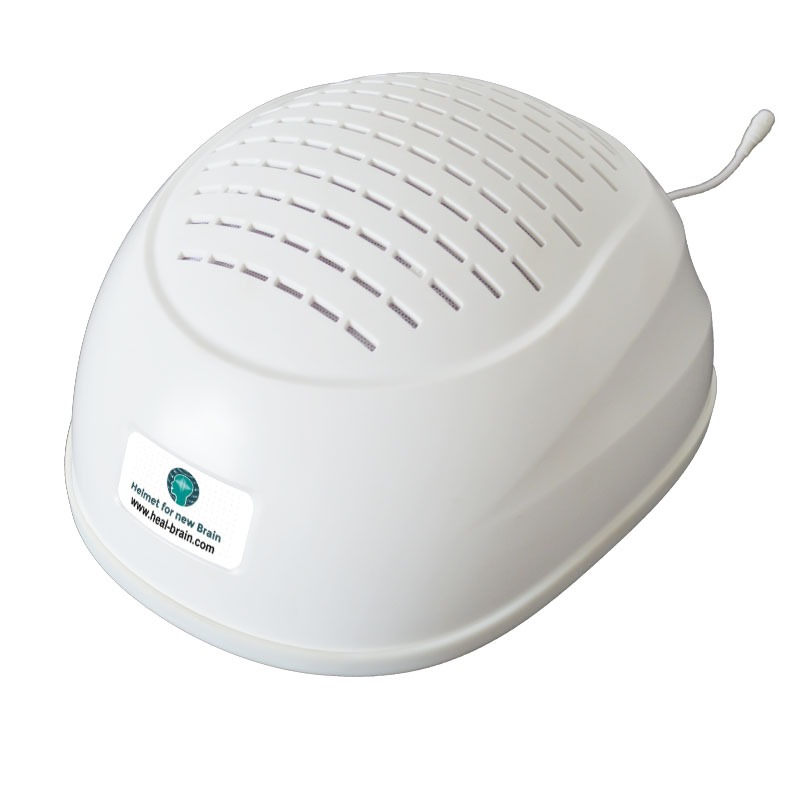
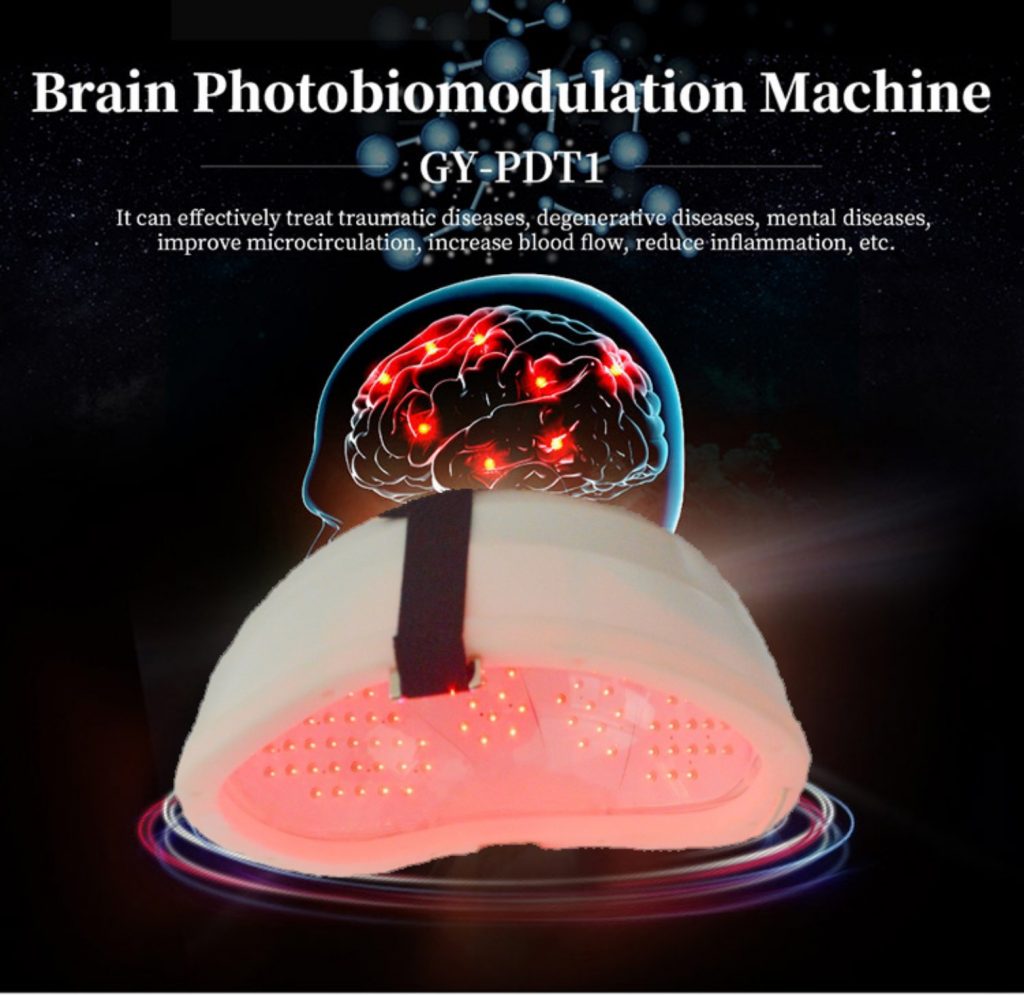
Brain Photobiomodulation Machine
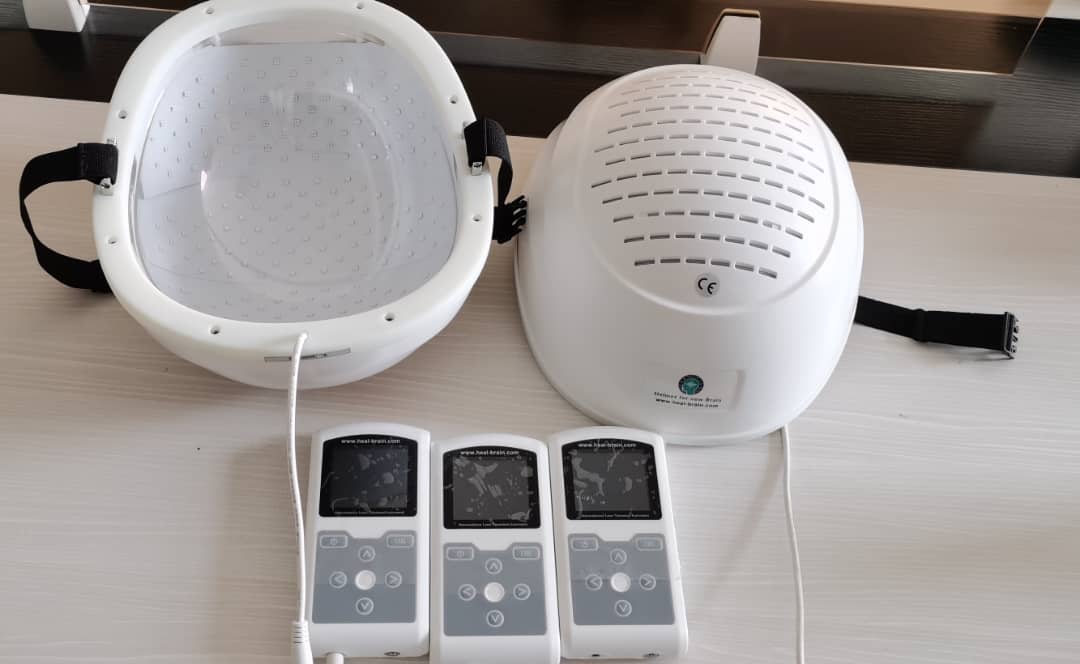
The Brain Photobiomodulation Machine is a therapeutic instrument based on the principle of photobiomodulation. It has a good therapeutic effect on traumatic events (stroke, traumatic brain injury, and global ischemia), degenerative diseases (dementia, Alzheimer’s and Parkinson’s), and psychiatric disorders (depression, anxiety, post traumatic stress disorder)
Photobiomodulation (PBM) describes the use of red or near-infrared light to stimulate, heal, regenerate, and protect tissue that has either been injured, is degenerating, or else is at risk of dying. One of the organ systems of the human body that is most necessary to life, and whose optimum functioning is most worried about by humankind in general, is the brain. The brain suffers from many different disorders that can be classified into three broad groupings: traumatic events (stroke, traumatic brain injury, and global ischemia), degenerative diseases (dementia, Alzheimer’s and Parkinson’s), and psychiatric disorders (depression, anxiety, post traumatic stress disorder). There is some evidence that all these seemingly diverse conditions can be beneficially affected by applying light to the head. There is even the possibility that PBM could be used for cognitive enhancement in normal healthy people. In this transcranial PBM (tPBM) application, near-infrared (NIR) light is often applied to the forehead because of the better penetration (no hair, longer wavelength).
Main Function
- NIR light can penetrate the head and reach the brain.
- NIR is absorbed by cytochrome c oxidase in mitochondria.
- Heat-gated ion channels also play a role.
- Increased blood flow, energy, neuroprotection, less inflammation, brain repair.
- Can treat traumatic (stroke, TBI), neurodegenerative and psychiatric diseases.
Specifications
| Name | Heal-brain.com |
| Model | |
| LED Wavelength | 810 nm |
| Led Quantity | 256 |
| Power(total helmet) | 15 W |
| Power(one LED) | 60 mW |
| Power | 24 mW/cm2 |
| Certificate | CE |
| OEM | Support |
| Color | White/Black |
| MOQ | 1 PC |
Indications
1. Traumatic events (stroke, traumatic brain injury, and global ischemia).
2. Degenerative diseases (dementia, Alzheimer’s and Parkinson’s).
3. Psychiatric disorders (depression, anxiety, post traumatic stress disorder).
Contraindication
1. Avoid direct exposure to the eyes, pregnant women’s abdomen, melanoma, brown spots.
2. Taboo patients with early and middle stage malignant tumors.
3. Contraindications to patients with acute bleeding disorders.
What is Brain Injury?
Brain Injury is the “multiple disabilities arising from damage to the brain acquired after birth. It results in deterioration in cognitive, physical, emotional or independent functioning. It can be as a result of accidents, stroke, brain tumours, infection, poisoning, lack of oxygen, degenerative neurological disease etc.”
The National Community Services Data Dictionary (Australian Institute of Health and Welfare, Canberra, 2012)
Traumatic Brain Injury occurs as the result of some external force being applied to the brain.
Stroke usually occurs as the result of a haemorrhage or blockage to the blood vessels that supply blood to the various regions of the brain.
Tumour
Tumours cause damage to the surrounding brain tissue and structures as they grow within the brain.
Infection
Bacterial or viral infections can lead to an inflammation of the brain covering (meningitis) or the brain tissue itself (encephalitis).
Poisoning/Toxins
Alcohol acts as a toxin and the long term misuse of alcohol can cause damage to brain tissue.
Hypoxia/Anoxia
Hypoxia/anoxia refers to reduced or, complete, stopping of the flow of oxygen to the brain leading to injury to brain tissue. Can be caused by overdoses, failed hangings, or near drowning.
Degenerative Neurological Diseases
Conditions including Huntington’s Disease, Parkinson’s Disease, and Alzheimer’s Disease are caused by abnormal changes to brain cells in particular regions of the brain.
The disability called brain injury – sometimes called acquired brain injury, or “ABI” – refers to any damage to the brain that occurs after birth. That damage can be caused by an accident or trauma, by a stroke, by a brain infection, by alcohol or other drug abuse or by diseases of the brain like Parkinson’s disease.
Brain injury is common. According to the Australian Bureau of Statistics, over 700,000 Australians have a brain injury, with daily “activity limitations” and “participation restrictions”. Three in every four of these people are aged 65 or under. As many as two out of every three acquired their brain injury before the age of 25. Three-quarters of people with a brain injury are men.
Indications
1. Traumatic events (stroke, traumatic brain injury, and global ischemia).
2. Degenerative diseases (dementia, Alzheimer’s and Parkinson’s).
3. Psychiatric disorders (depression, anxiety, post traumatic stress disorder).
Contraindication
1. Avoid direct exposure to the eyes, pregnant women’s abdomen, melanoma, brown spots.
2. Taboo patients with early and middle stage malignant tumors.
3. Contraindications to patients with acute bleeding disorders.
Main Function
- NIR light can penetrate the head and reach the brain.
- NIR is absorbed by cytochrome c oxidase in mitochondria.
- Heat-gated ion channels also play a role.
- Increased blood flow, energy, neuroprotection, less inflammation, brain repair.
- Can treat traumatic (stroke, TBI), neurodegenerative and psychiatric diseases.
Order now
Price: 1900,00 €
